Carmignano: what the name doesn't say
The denomination with the most extraordinary historical record in Italian wine is almost absent from the international radar. That's not an accident, it's the result of seventy years of administrative simplification.
A question that never changes
In 1756, Filippo Mazzei, a diplomat from Poggio a Caiano, hosted a dinner in London at the home of a Mr. Neave. Three bottles were placed on the table, served anonymously, without labels: one Burgundy, one Bordeaux, one Carmignano bottled six or seven years earlier. The guests tasted, discussed, and unanimously gave their preference to the third bottle. When Mazzei revealed it was Carmignano, the reaction was immediate: "Carmignano? But where on earth is that?"
Carmignano's producers still tell this story, and they tell it with a smile, because the question has remained identical for nearly three centuries. Anyone who arrives in Carmignano today and hears about its wines still has the same instinctive reaction. This isn't ignorance: it's the precise result of how this denomination has been handled by the recognition system.
What the market sees
On Vivino, in international wine shops, in guides to Tuscan wines, Carmignano appears rarely and almost never prominently. When it does appear, it tends to be described as a small DOCG near Florence, a niche denomination with an interesting history, an alternative for those who have already explored Chianti Classico and Brunello. That description is technically accurate and substantially empty, because it compresses into a few neutral words something with a very precise historical structure.
Carmignano produces between 600,000 and 700,000 bottles a year, distributed among 12 producers. Chianti Classico produces 37 million, with 482 members. In volume terms, the comparison is meaningless. But the comparison that matters doesn't concern volumes, it concerns what the recognition system has done over time with the two denominations, and what has been left outside that system.
The record that doesn't travel
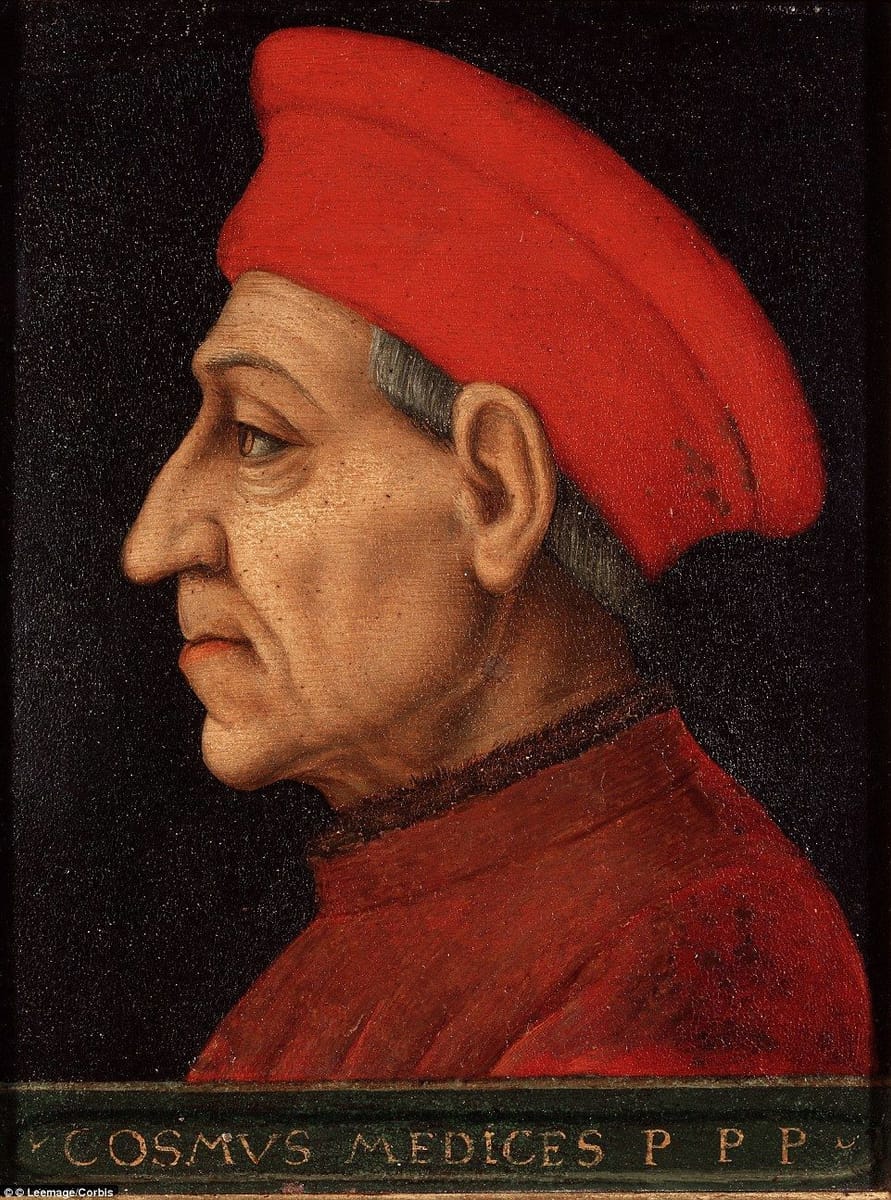
The Bando of 24 September 1716, issued by Grand Duke Cosimo III de' Medici, officially delimited four areas of viticultural excellence in Tuscany: Chianti, Pomino, Carmignano, and Val d'Arno di Sopra. The boundaries of the Carmignano zone were drawn using the Barco Reale as reference, a Medici nature reserve enclosed by a wall two metres high and 52 kilometres long. It is the first formal act of viticultural demarcation in modern history, predating the French AOC system by over a century.
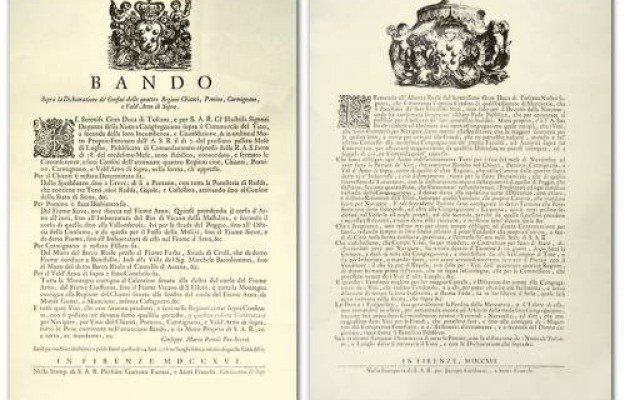
This is not a catalogue footnote. It is proof that these hills were already recognisable as a distinct category before any regulatory system existed to say so. In 1396, the notary Lapo Mazzei wrote to Francesco Datini, a merchant from Prato, reporting that he had paid a gold florin per load for Carmignano wine, when the going price for the most prestigious wines of the time was barely a quarter of that. In 1673, Francesco Redi, in his Bacco in Toscana, imagines the god of wine comparing all the wines of Italy and France, and concluding that those of Artimino and Carmignano are something else entirely. In 1835, Repetti described it as among the finest and most renowned wines in Tuscany. In 1870, Amati's geographical dictionary of Italy used a single word to define it: "exquisite."
This record never circulated. It didn't become market narrative, didn't translate into land prices, didn't enter the vocabulary of international importers. The reason has a precise date.
1952 and the loss of identity
In 1952, a ministerial decree redrew the Chianti zones. Seven different Chianti sub-appellations were recognised, including Chianti Montalbano, and the entire Carmignano area was absorbed into the Chianti DOC. A denomination with four centuries of documented reputation disappeared in a single administrative act.
This was not an innocent simplification. Carmignano and Chianti are structurally different wines: different soils, a distinct microclimate, and above all an ampelographic composition that has no equivalent elsewhere in Tuscany. Cabernet (Franc and Sauvignon combined, in a mandatory proportion of between 10 and 20%) has been present in Carmignano's blend for centuries. Locally it is called "uva francesca," the French grape, because tradition holds that the first vines were introduced at the request of Catherine de' Medici in the sixteenth century when she became Queen of France. In 1773, Villifranchi, in his Oenologia Toscana, described Carmignano's winemaking technique as distinct from Chianti's: the must was worked twice daily, the governo was carried out using dried whole berries rather than fresh must, after the grapes had been left to raisin and season in the sun.
When Carmignano obtained its autonomous DOC in 1975 (retroactively covering vintages from 1969) it simultaneously became the first Italian DOC to officially authorise the use of Cabernet in the blend. The Super Tuscans that would reshape Italian wine in the 1980s and 1990s were doing the same thing without the legal right to do so. Carmignano had that right thirty years earlier, but the denomination had nearly vanished in the meantime.
What the Cabernet doesn't signal
When a consumer reads "Cabernet" on a Tuscan label today, the association is almost automatic: Super Tuscans, wines born as an act of rupture with tradition, built around an international variety introduced deliberately to reach the global market. That association is understandable, and in the case of Carmignano it is wrong.
The Cabernet in these hills is not a modern addition or a marketing decision. It has been part of this wine's genetic identity since before any DOC system existed, and the production code mandates it as a compulsory component precisely because it was already historically present. Unlike most Tuscan wines, and unlike many French ones, Carmignano's Cabernet produces no unpleasant herbaceous aftertaste, a characteristic local producers attribute to the specific pedoclimatic conditions of these hills, where rapid drainage through rocky soil and limited rainfall in the weeks before harvest create a microclimate with effects comparable to those of Bordeaux.
This distinction cannot be communicated through the name of the denomination. It is not visible on the label. It is one of the pieces of information that the recognition system cannot carry.
The structure of a value not yet priced in
Barolo, Brunello, and Chianti Classico share something Carmignano does not yet have: the price of the land has already incorporated the reputation. Buying a hectare of vineyard in the Langhe or Montalcino today means paying for an asset whose future value is already substantially discounted into the present price. That is not necessarily a mistake, but it is a different kind of operation from what happens where the reputation is documented but not yet priced.
Carmignano has 135 hectares under vine in total, 12 producers, a production code that requires a minimum of two years' ageing and three for the Riserva, four centuries of documented recognition, and an ampelographic identity not replicable elsewhere in Italy. Sixty percent of production goes abroad, yet the denomination remains almost unknown to international consumers.
The useful distinction is not "this wine is worth more than that one." It is simpler than that: there are denominations where the value is already in the price, and denominations where the value is in the structure but not yet in the price. Carmignano belongs to the second category. Recognising that difference requires looking past the name, and knowing what to look for when the name says nothing.
Curated by Con Gusto
We select, analyze, and translate Italian food culture into practical taste decisions.
Trending Post

Stay up-to-date
Related Post

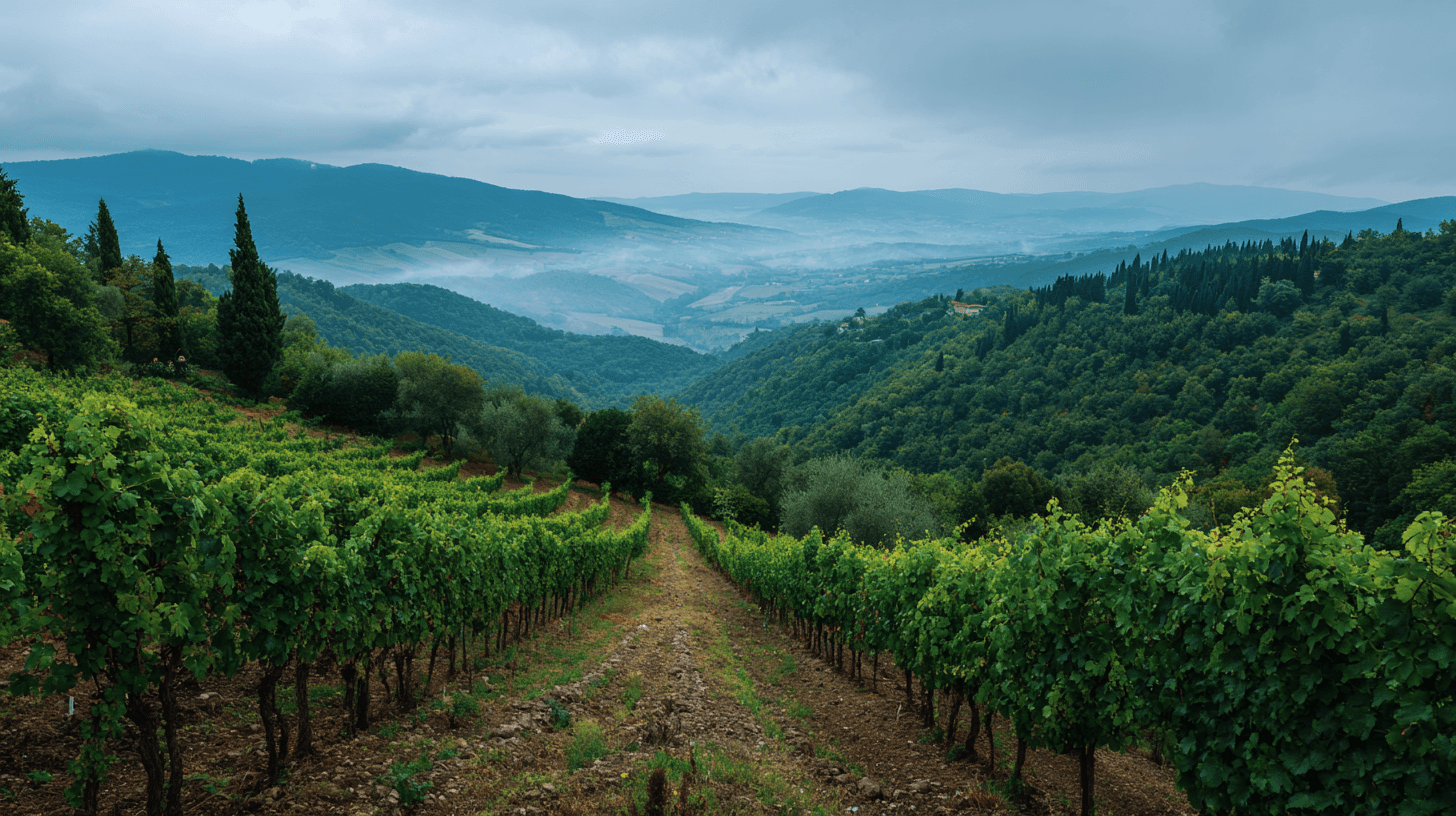
A denomination recognised as an area of excellence in 1716, described as "arguably the most famous of the Chianti sub-zones" by a Master of Wine in 2018, and almost absent from the international consumer radar. The reason is in the name.
Any system that manages complex value works when it codifies enough to make context legible, and little enough to avoid destroying what makes that context irreplaceable. Barolo has understood this for two hundred years.