Chianti Rufina: the name that covers the signal
A denomination recognised as an area of excellence in 1716, described as "arguably the most famous of the Chianti sub-zones" by a Master of Wine in 2018, and almost absent from the international consumer radar. The reason is in the name.
What someone reads who doesn't know what to look for
When a consumer encounters "Chianti Rufina" on a label, the automatic reading is predictable: Chianti, Rufina zone. A geographical variant of something they already know, or think they know. The association is immediate and nearly impossible to avoid, because the word "Chianti" carries one of the most consolidated systems of expectation in Italian wine. Tuscan wine, Sangiovese, mid-range pricing, global distribution. An association built on hundreds of millions of bottles a year.
The problem is not that this association is false. It's that it's irrelevant to what's in the glass. Chianti Rufina is structurally a different wine from the system its name places it in, and there is no visible mechanism on the label to signal this to someone who doesn't already know.
The physical structure the name doesn't communicate
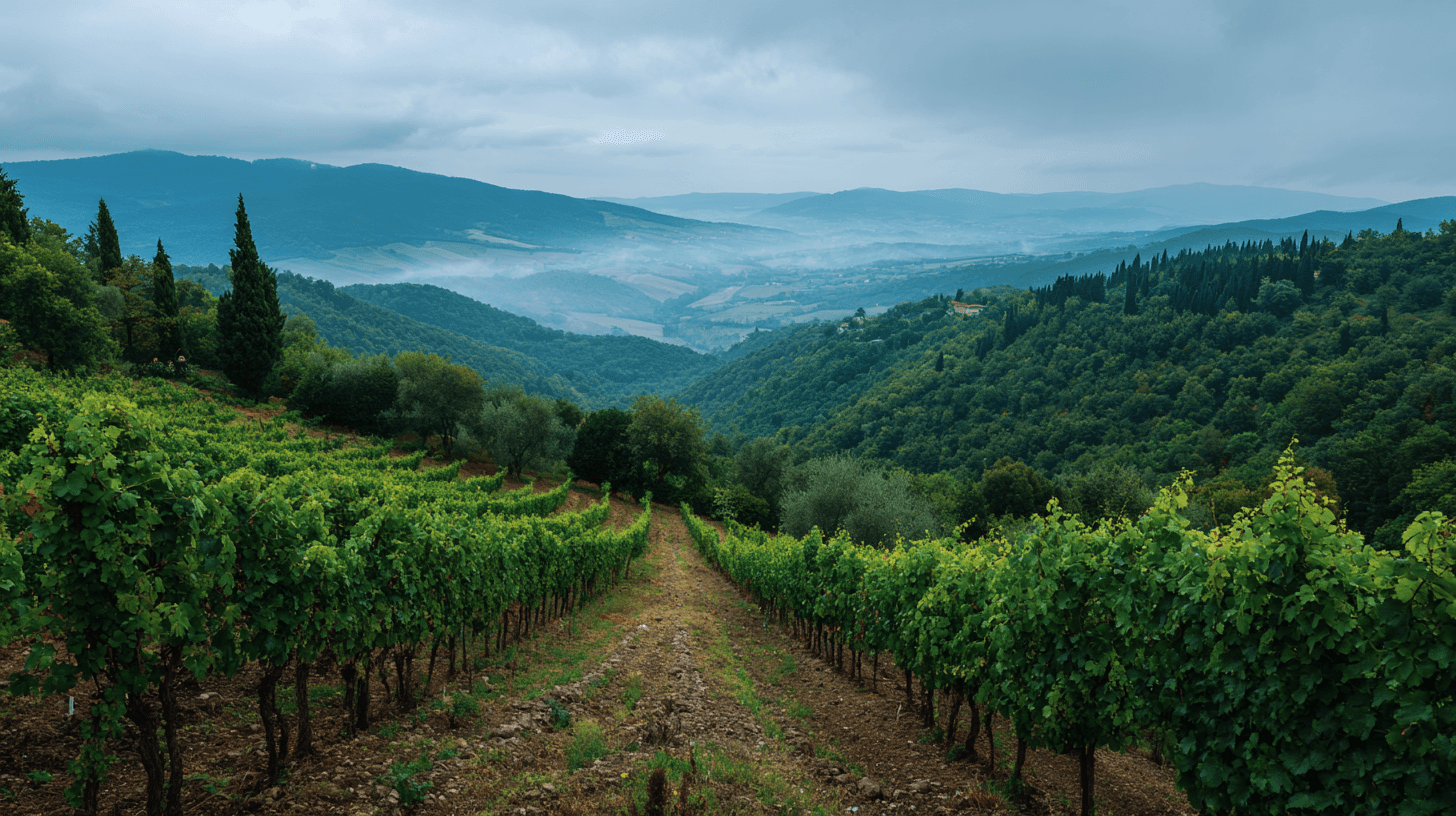
The Sieve valley, northeast of Florence, is one of the coldest viticultural environments in Tuscany. Chianti Rufina is produced at altitudes between 200 and 700 metres, with some parcels reaching 800 metres, among the highest elevations in the entire region for viticulture. The soils are galestro and alberese, calcareous and well-draining. The diurnal temperature variation between day and night is among the most pronounced in the Chianti system, and this has direct consequences on the wine's profile: structurally higher acidity, better-preserved aromatics, greater longevity than the average across the warmer, lower-lying Chianti zones.
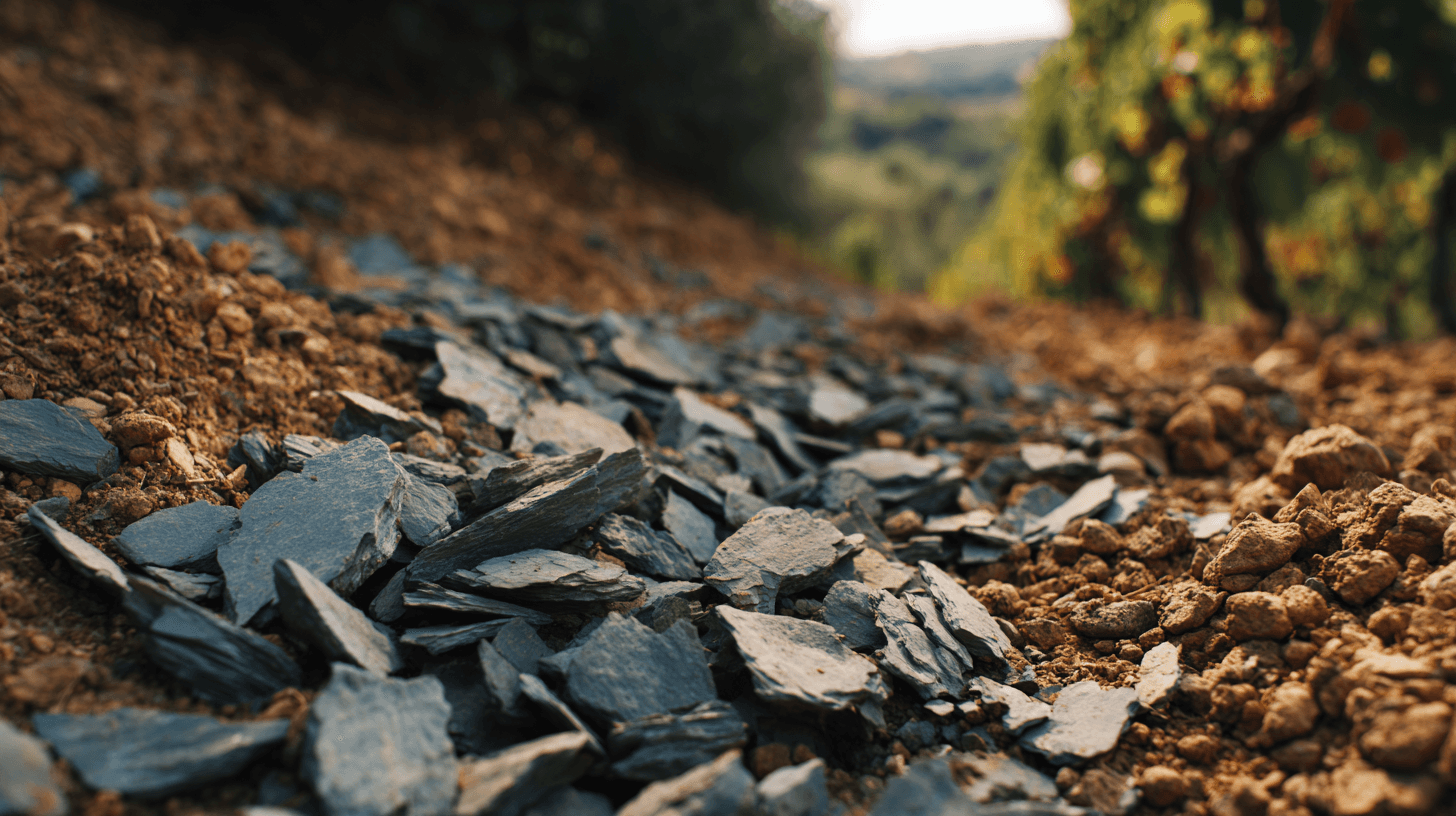
Figure 1: an example of galestro soil.
Of 12,483 total hectares of territory, only 750 are registered as DOCG vineyard. Less than 6% of the land produces the wine that carries the denomination's name. There are 22 active producers, 20 of whom belong to the Consorzio. It is a production structure closer to Carmignano than to Chianti Classico: small, coherent, with a number of operators that allows consistency without excessive bureaucratisation.
None of this is visible on the label. The altitude doesn't appear. The soil structure doesn't appear. The temperature variation doesn't appear. What appears is "Chianti," and that single word determines the wine's perceived position before the bottle is even opened.
The historical credential that becomes noise
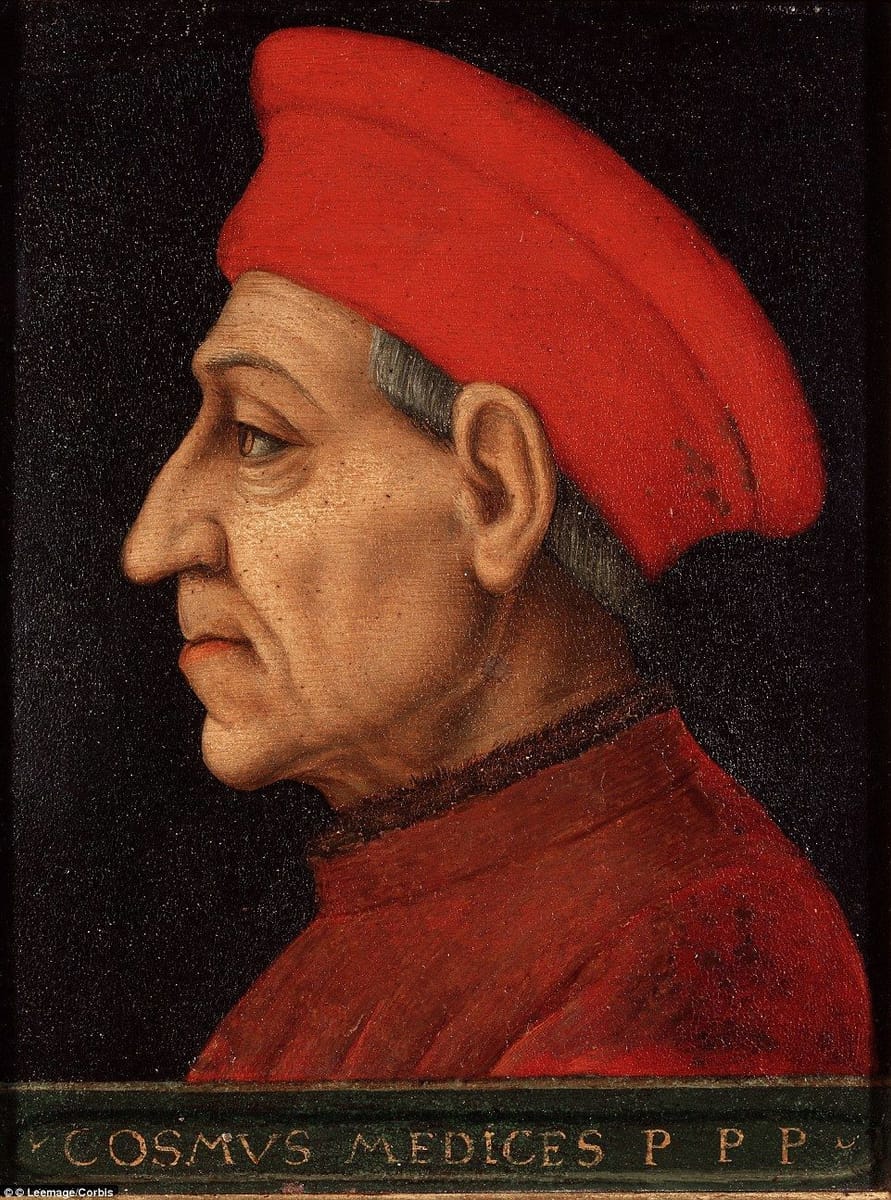
The Bando of 24 September 1716, issued by Grand Duke Cosimo III de' Medici, is the same document that recognised Carmignano and Chianti as areas of viticultural excellence. In that document, the zone we now call Chianti Rufina was recognised under the name "Pomino", a distinct geographical delimitation, not a sub-zone of anything else. It was one of four areas the Grand Duchy considered worthy of formal protection, at a moment when no other country had yet conceived of anything similar.
This is Chianti Rufina's historical legitimacy: it does not derive from the Chianti system, it is contemporaneous with it and independent of it. Both denominations were born from the same regulatory act, with the same formal standing. The fact that "Chianti" has since become one of the most widely distributed names in the world, while "Rufina" is almost unknown outside the circle of specialists, does not reflect a difference in historical value. It reflects a difference in the two names' capacity to travel.
In June 2018, during the Italy Fine Wine Encounter masterclass in London organised by Decanter, Master of Wine Peter McCombie described Chianti Rufina as "arguably the most famous of the Chianti sub-zones." It is a precise judgement, from someone who knows the system from the inside. It did not translate into market positioning, did not generate a recognisable price premium, did not change the denomination's position in the perception of international consumers. A statement by a Master of Wine remains within the specialist ecosystem. It does not penetrate the automatic association that occurs when someone reads a label.
How the compression works
The mechanism is not new, and it doesn't apply only to wine. When a larger category name absorbs a specific name, the category almost always wins in fast reading. Not because the specific name is weak, but because the category name has already occupied the available cognitive space. "Chianti Rufina" gets processed as "Chianti + geographical specification," not as "a distinct denomination that shares part of its name with another denomination for historical reasons."
The base Chianti (neither Classico nor Rufina) produces volumes that make the system even harder to navigate. Every inexpensive bottle labelled Chianti on global mass-market shelves contributes to sedimenting an association that Chianti Rufina cannot control. Chianti Classico, with its 37 million bottles a year and 482 producers, has built a differentiating narrative over recent decades (the Gallo Nero symbol, the Gran Selezione tier, the UGA sub-zones) that partially separates it from the generic category. Chianti Rufina, with 3.5 million bottles and 20 producers, does not have the critical mass to build a separate narrative with comparable effectiveness, and it has no visual symbol that performs the distinction before the label is read.
The result is that the denomination's historical source of legitimacy — belonging to the Chianti system recognised in 1716, is simultaneously the mechanism that makes it unrecognisable. This is not a paradox solvable through better communication. It is a structure.
The criterion
There are situations in which the credential that legitimises something is the same one that prevents its legibility. Not because the credential is false, but because the context in which it is read has emptied it of specificity. A denomination that carries the most genericised word in its sector within its own name cannot differentiate through that name: it must differentiate in spite of it.
Recognising this pattern doesn't help you understand Chianti Rufina differently. It helps you understand where to look when you suspect that a name is concealing something rather than communicating it. The useful question is not "is it good?", it's "what did it have to lose in order to become legible at scale?" In the case of Chianti Rufina, the answer is straightforward: it hasn't lost anything. It hasn't yet become legible enough to have had to. And that is precisely why what it contains is still intact.
Curated by Con Gusto
We select, analyze, and translate Italian food culture into practical taste decisions.
Trending Post

Stay up-to-date
Related Post

The denomination with the most extraordinary historical record in Italian wine is almost absent from the international radar. That's not an accident, it's the result of seventy years of administrative simplification.
Any system that manages complex value works when it codifies enough to make context legible, and little enough to avoid destroying what makes that context irreplaceable. Barolo has understood this for two hundred years.