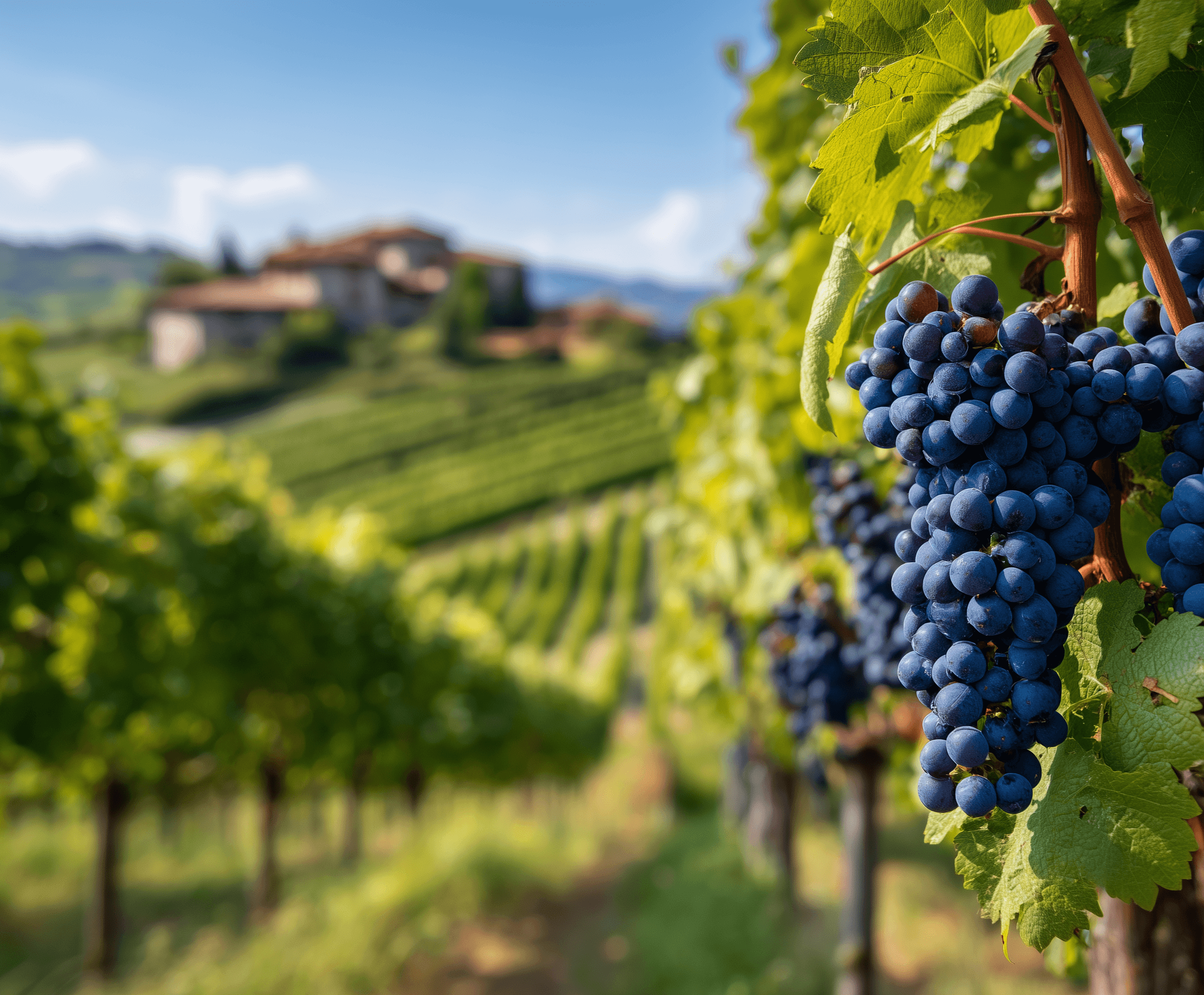
Barolo: what doesn't fit on the label
Any system that manages complex value works when it codifies enough to make context legible, and little enough to avoid destroying what makes that context irreplaceable. Barolo has understood this for two hundred years.
A system that anticipates its own exception
Barolo has one of Italy's most stringent production codes: minimum ageing requirements, mapped subzones, appellations protected by legally binding boundaries. And yet anyone who knows it well understands that two Barolos from the same MGA (Menzioni Geografiche Aggiuntive, or Additional Geographic Mentions ), the same vintage, can be completely different wines. The system doesn't deny this. It accounts for it, and that is not a paradox, but the key to understanding how it actually works.
Giulia Colbert and the wine that learns to replicate itself
In nineteenth-century Langhe, nebbiolo ferments for as long as the cold allows. The result is irregular, sometimes off-dry, often unstable, a wine tied to the season and the hand that produces it, one that exists but has not yet become a stable category.
The first transformation comes with Giulia Colbert Falletti. Born in the Vendée, granddaughter of Louis XVI's finance minister, she moves to Piedmont after the Revolution and marries Carlo Tancredi Falletti, Marquis of Barolo. She is not a decorative figure: she manages vast estates, funds social initiatives, moves within Turin's intellectual elite. When she decides to intervene in the wines of her properties, she does so with a clear objective. She brings in French oenologist Louis Oudart, introduces controlled fermentation, more rigorous grape selection, and attention to cellar hygiene. Barolo becomes dry, but more importantly, it becomes replicable. Knowledge that had been dispersed across the countryside is disciplined, and the wine enters a first form of codification: not yet normative, but operational.
From wine of kings to public sign
The next transformation is political. The House of Savoy adopts Barolo as its representative wine at a moment when the Kingdom of Sardinia, under Carlo Alberto and then Vittorio Emanuele II, is building its national projection. Camillo Benso di Cavour, owner of the castle of Grinzane and an active agricultural experimenter, invests directly in modernising local viticulture. The wine appears at official banquets, is sent as a diplomatic gift, circulates through Turin's drawing rooms.
"The wine of kings and the king of wines" is not merely rhetoric: it is a positioning. A wine served at court acquires a different status from a local bottle, it represents territory, stability, and state ambition. Barolo stops being a product of the Langhe and becomes a public sign, with everything that entails in terms of expectations and responsibility for consistency.
A grammar of the territory
In 1976, Renato Ratti publishes the first systematic map of Barolo's crus. He is not an academic: he is a producer who has worked in Brazil for Cinzano, knows the international market, and understands the value of a legible classification. His map is not a graphic exercise — it is an attempt to organise the territory according to shared criteria. Ratti studies exposures, soils, altitudes, the history of individual parcels, drawing implicitly on Burgundian logic: the differences between vineyards are not accidental, they are structural.
The map is adopted because it provides a grammar that was previously missing. Producers, critics, and importers begin to use those names as stable reference points, and Cannubi, Brunate, Rocche, Bussia cease to be mere place names and become categories of value. The difference between two vineyards is no longer only perceived by those who know them intimately: it is named, and therefore transmissible.
The question the market didn't know how to ask
In the 1980s and 1990s comes the season of the so-called Barolo Boys. Producers like Elio Altare and Luciano Sandrone introduce new barriques, shorter macerations, greater extraction. The wine becomes more concentrated, more immediate, more legible for an international market that thinks in the language of scores. Parker gives it 98, the price rises, investment follows.
But this is where the central question opens. A high score communicates something precise: intensity, structure, immediate presence. These are measurable, comparable characteristics, transportable to any market. The number works because it compresses everything that can be read at a global scale into a single figure. What remains outside that compression is exactly what makes Barolo interesting: the tension between raw tannin and the time that dissolves it, the variability of the vintage as information rather than defect, the difference between two Cannubi vineyards two hundred metres apart that no technical sheet can fully explain. The international market did not reject that complexity, it simply ignored it, because it lacked the tools to buy it. The Barolo Boys did not simplify out of negligence: they were responding to a genuine question about how much can be translated without losing everything.
Codifying the perimeter, not the contents
The institutional response comes in 2010 with the MGAs promoted by the "Consorzio di tutela" and recognised by the Italian Ministry of Agricultural Policy. The MGAs define the subzones with precision: writing "Cannubi" or "Vignarionda" on a label requires compliance with strict cartographic and regulatory boundaries. Codification becomes normative it does not create quality, but defines the conditions under which quality can be declared, establishes who may use a name and under what terms, and protects the reputation accumulated over time.
It is a system that has learned to do one very specific thing: protect what cannot be codified by codifying the perimeter within which to look for it. Barolo's production code does not certify the tannin, and it could not. Any system of rules that attempted to capture even that would transform the wine into something else, replicable, homogeneous, stripped of the tension that makes it relevant. The MGAs do not guarantee that every Barolo will be the same: they guarantee that whoever writes "Brunate" on a label has earned the right to do so. What happens in that vineyard, in that vintage, with that particular hand, remains outside the map, and that zone beyond the map is not a limitation of the system, but the reason the system is worth anything at all. [1]
The criterion
Any system that manages complex value (an appellation, a method, an institution) works when it codifies enough to make the context legible, and little enough to avoid destroying what makes that context irreplaceable. When codification exceeds that threshold, the system protects the form without preserving the substance. Barolo has understood this for two hundred years, and its production code is the proof.
[1] MGA stands for Menzione Geografica Aggiuntiva or Additional Geographic Mention. It's the official classification system introduced in 2010 that formally delimits the individual vineyard zones within the Barolo (and Barbaresco) appellation.
In practical terms, an MGA is a named, cartographically defined subzone. There are 181 of them across the Barolo production area. If a producer wants to put a specific vineyard name (Cannubi, Brunate, Bussia, and so on) on the label, the wine must come exclusively from grapes grown within that mapped parcel, and the label must follow specific formatting rules that distinguish it from a generic Barolo.
Before the MGAs were formalised, vineyard names appeared on labels more loosely, without consistent legal definition. The 2010 regulation didn't invent those names (many had been in use for decades, and Ratti's 1976 map had already given them cultural weight) but it turned them into protected designations with enforceable boundaries.
The closest equivalent in France would be the lieu-dit or premier cru classifications in Burgundy, which is not coincidental: the whole logic of recognising that specific plots of land produce structurally distinct wines is borrowed from that tradition.
Curated by Con Gusto
We select, analyze, and translate Italian food culture into practical taste decisions.
Trending Post

Stay up-to-date
Related Post
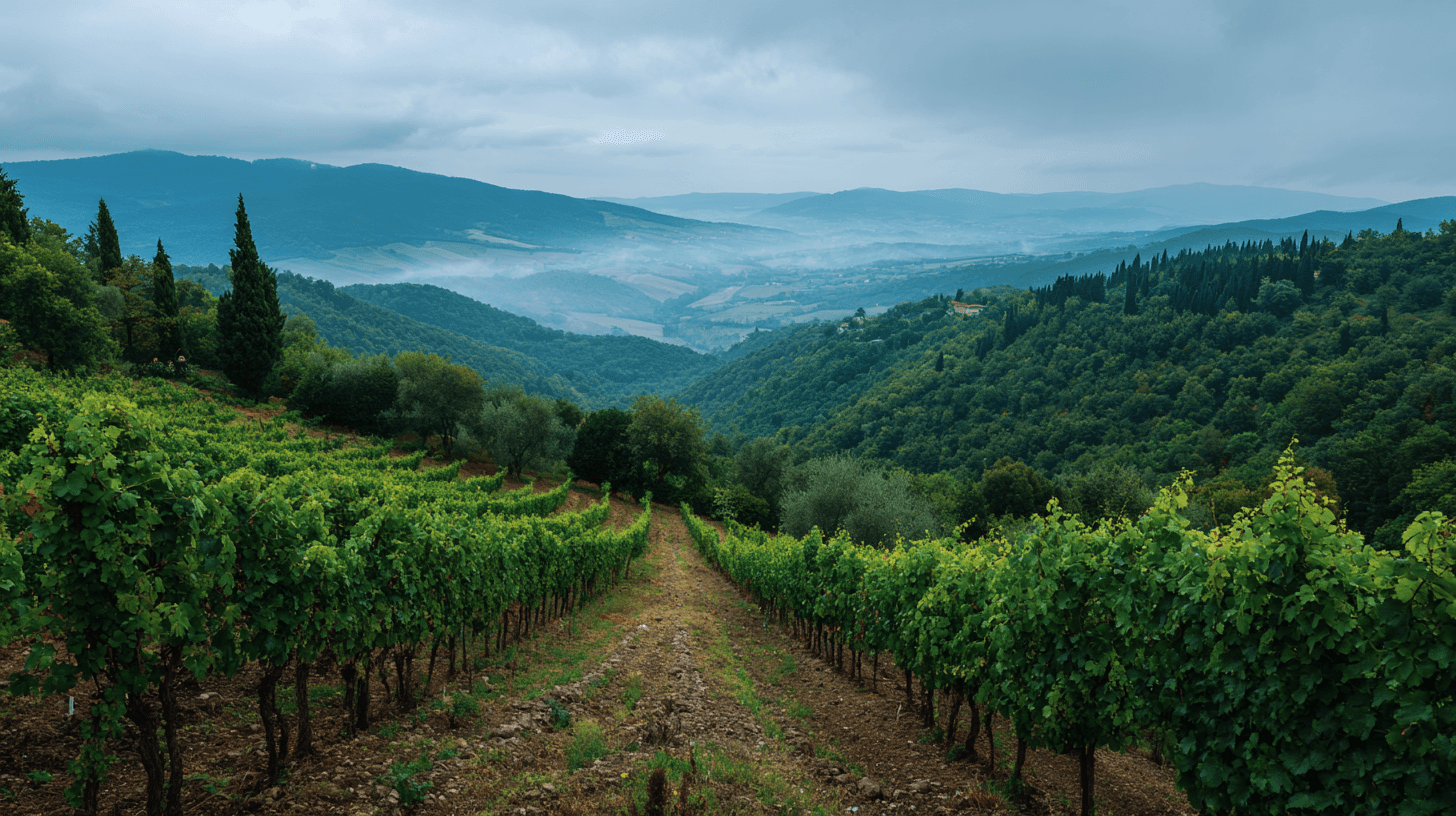
A denomination recognised as an area of excellence in 1716, described as "arguably the most famous of the Chianti sub-zones" by a Master of Wine in 2018, and almost absent from the international consumer radar. The reason is in the name.
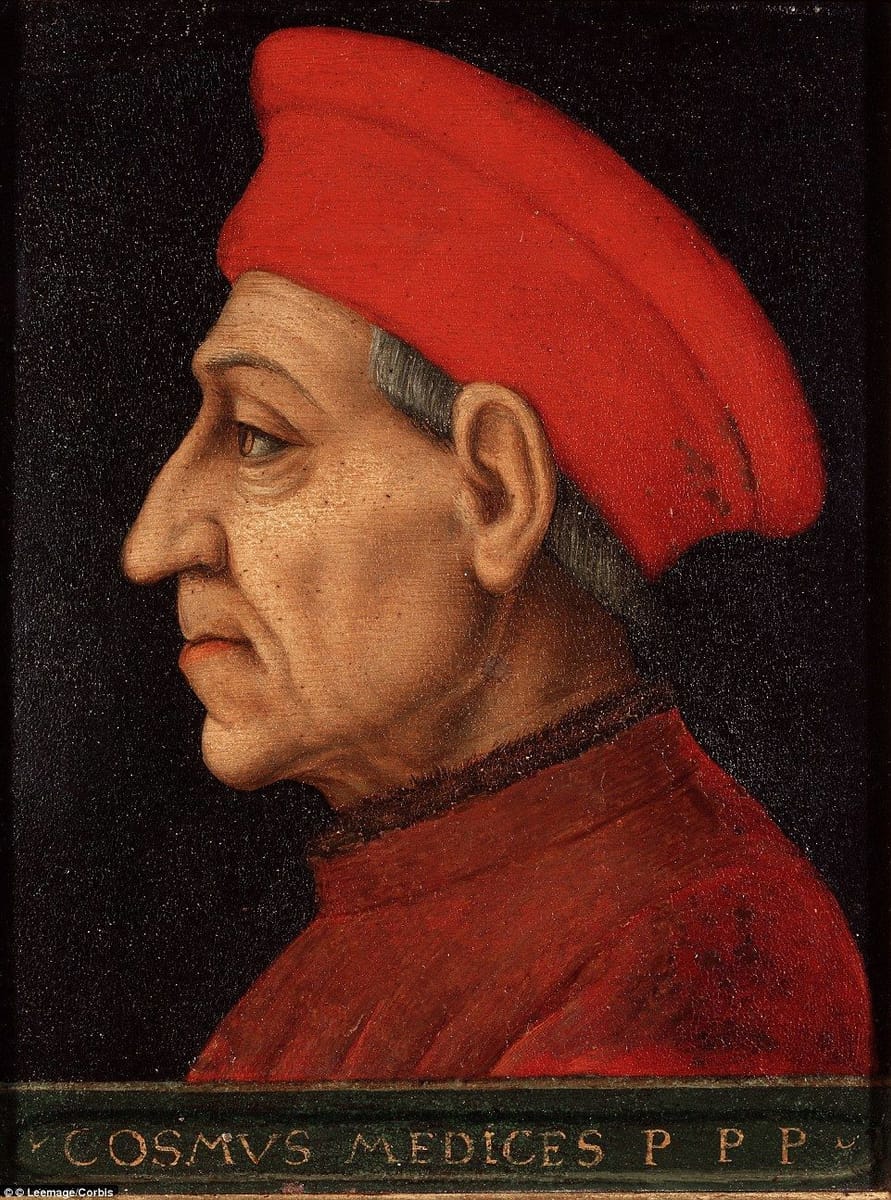
The denomination with the most extraordinary historical record in Italian wine is almost absent from the international radar. That's not an accident, it's the result of seventy years of administrative simplification.